
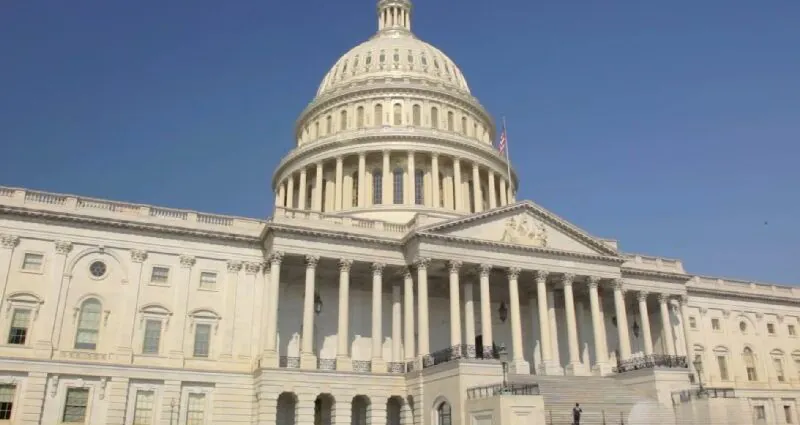
Washington, D.C., gets much of its formal look through pale stone buildings, monuments, churches, museums, and civic spaces. Indiana limestone is one of the main reasons.
Quarried in south-central Indiana, Indiana limestone shaped major American buildings such as the Washington National Cathedral, the Empire State Building, and the Metropolitan Museum of Art.
In the capital, it became popular because it offered beauty, durability, easy carving, fire resistance, a steady supply, and a strong connection to American civic identity.
So why did Washington, D.C. use so much Indiana limestone?
What Indiana Limestone Is and Why It Is Geologically Special
Indiana limestone comes out of a famous stone belt in south-central Indiana, especially near Bloomington and Bedford.
Long before quarries, rail lines, or federal building campaigns, warm inland seas covered the region. At least 345 million years ago, calcite-bearing marine organisms created carbonate-heavy deposits that later became one of America’s most important building stones.
Several geological facts explain why the material became so dependable for architects and builders:
- Ancient seas created carbonate-rich beds instead of mixed, uneven deposits.
- Calcite-bearing marine organisms helped create high calcium carbonate content.
- Long geological compression produced beds that could be quarried in large, usable blocks.
Scientists have described ancient Indiana as a carbonate factory because conditions there produced thick, consistent limestone beds. Over time, that geological advantage became an architectural advantage.
Most valuable quarrying activity centered on a stretch of roughly 35 miles between Bloomington and Bedford.
Indiana’s Stone Belt also runs about 30 miles through Owen, Monroe, and Lawrence counties.
Because the deposit was concentrated and dependable, builders could order large quantities of stone with similar color, texture, and performance.
Indiana limestone was never just ordinary rock. Its value came through consistency. Large blocks could be quarried, cut, matched, carved, and installed with a level of uniformity that made it ideal for civic projects.
For a city like Washington, where public buildings needed to look planned, formal, and permanent, that consistency mattered.
Why Architects Loved Indiana Limestone

Architects embraced Indiana limestone because it solved several problems at once. Grand buildings needed scale, detail, strength, and visual calm. Indiana limestone offered all four.
Industry experts often call it “the Nation’s Building Stone.”
That nickname fits because it became a preferred material for public buildings, universities, museums, churches, courthouses, and monuments across the country.
Architects had practical reasons to keep choosing it for complex civic designs:
- More than 97% calcium carbonate gave the stone unusual purity.
- Freestone structure allowed cutting and carving in any direction.
- Similar strength in multiple directions helped reduce design limits.
- Softer texture made ornament, carved profiles, and columns easier to produce than harder stones.
- Finished installations could last 150 to 200 years with little maintenance.
Craft also played a major role. Indiana limestone could handle ornament, columns, carved profiles, facades, and fine details without the higher cost and difficulty often tied to harder stones.
Durability set it apart among many building materials, while its softer composition makes shaping it more cost-effective than marble or granite.
For Washington, D.C., that mattered. Federal architecture needed buildings that looked dignified, not fragile.
Indiana limestone allowed architects to create serious civic designs with carved detail, long life, and a pale tone suited to classical architecture.
Fire, Building Codes, and the Rise of Stone Cities
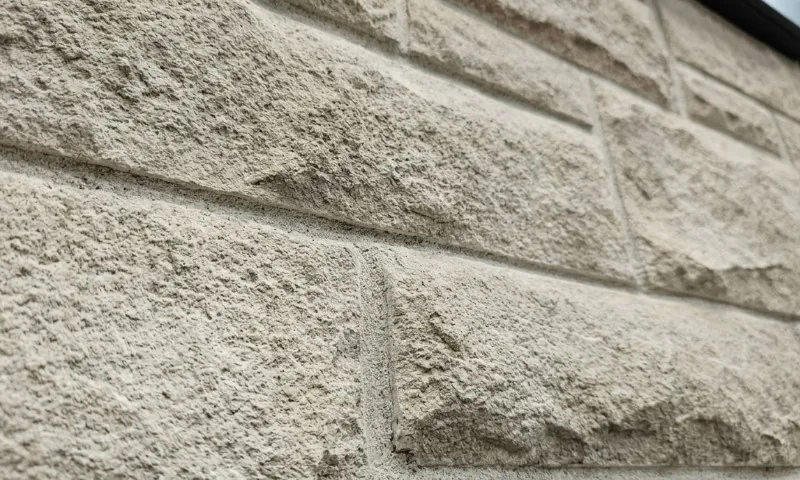
Major urban fires changed how American cities thought about building materials.
Great Chicago Fire of 1871 became one of the key turning points. Fires in cities such as Chicago and Boston exposed the danger of older construction habits and pushed officials, architects, and builders toward safer materials.
Demand for Indiana limestone surged in the 1890s as cities rebuilt and adopted stricter codes. Flame resistance made stone attractive, especially for dense urban settings where public confidence depended on buildings that looked safe and permanent.
Post-fire building priorities gave stone a stronger place in American construction:
- Civic buildings needed materials that did not feed flames.
- Newer codes rewarded noncombustible construction.
- Public institutions wanted buildings that looked safer and more permanent.
- Rebuilding campaigns created demand for large quantities of dependable stone.
Post-1871 building-code changes helped move American construction past wood-heavy and more vulnerable materials. Brick still played a major role, but stone gained new importance for high-profile civic, commercial, and institutional projects.
Washington, D.C. fit into that larger national shift. Its public buildings had to communicate order, safety, and endurance.
Indiana limestone answered more than an aesthetic need. It gave architects a material that matched new concerns about fire, durability, and long-term public trust.
Why Indiana Became Washington’s Stone Supplier
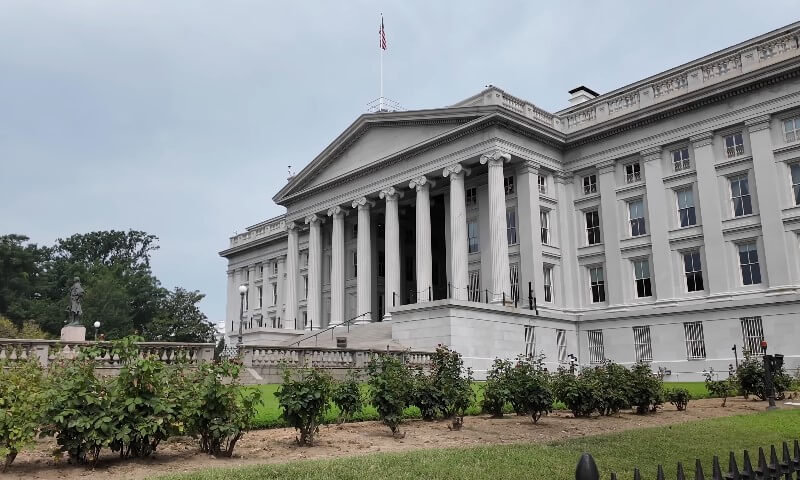
Commercial quarrying in Indiana began in 1827, giving the industry decades to mature before Washington’s major federal building campaigns expanded.
By the time the capital needed large amounts of quality stone, Indiana already had quarries, fabricators, skilled labor, and transport connections ready.
Railroads made the connection practical. Heavy stone could move out of south-central Indiana and reach East Coast cities in quantities large enough for major projects. Industrial quarrying also helped supply consistent blocks and cut stone on a scale suited to federal architecture.
Industry scale mattered because Washington needed more than beautiful stone samples. It needed a supply chain that could support major public construction:
- 54 fabricating companies worked under the Indiana Limestone Institute network.
- Seven limestone quarries supplied material through that same industry structure.
- Related industry contributors supported quarrying, cutting, transport, and installation.
- Rail access helped Indiana limestone reach East Coast building sites in large volume.
Indiana limestone was used in tens of thousands of buildings and monuments across the United States. Empire State Building, Metropolitan Museum of Art, Yankee Stadium, university buildings, and many civic projects all point to the same national pattern.
Washington became one of the most visible showcases because federal architecture demanded dignity, permanence, and symbolism.
Washington, D.C. as a Showcase for American Stone
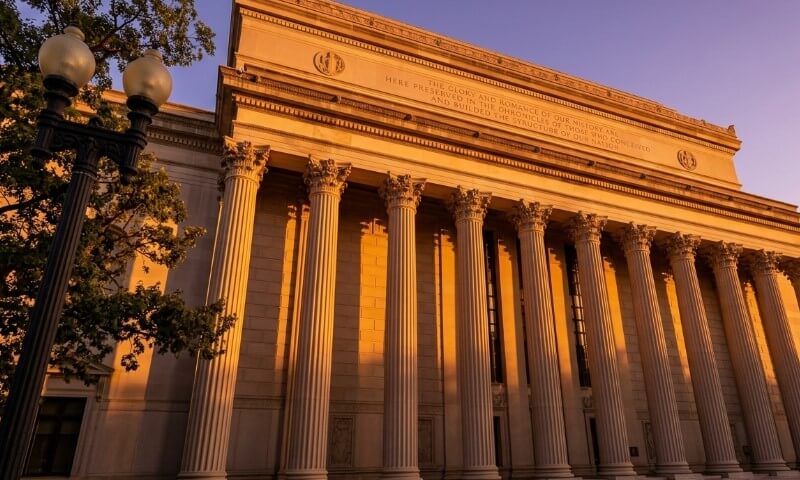
Indiana limestone appears across important parts of Washington, D.C.’s built environment.
Washington National Cathedral, Treasury Building, and Federal Triangle all connect to the city’s pale stone identity. Each project needed to look serious, formal, and lasting.
Pale limestone worked especially well with classical architecture. Columns, cornices, carved details, and broad facades gained a calm, official tone through the stone’s light color. In a capital built to project authority, that visual effect mattered.
Indiana limestone also helped unify Washington’s appearance. Different buildings could have different architects, functions, and dates, yet the shared use of pale stone created a familiar civic character.
Government blocks, churches, museums, and formal public spaces felt connected without needing to look identical.
A modern example shows how the material still fits Washington’s stone tradition:
- 900 16th Street used thousands of square feet of stone.
- White Cherokee marble panels were set inside an Indiana limestone grid.
- A low-honed finish gave the surface a restrained, formal appearance.
- Light-colored stone connected the newer project to Washington’s older civic palette.
That project shows how Indiana limestone still belongs in the city’s architectural vocabulary. It no longer belongs only to older monuments or historic federal buildings. Architects still use it when they want new construction to speak the same visual language as Washington’s older civic fabric.
Symbolic Value – A National Capital Built With National Materials
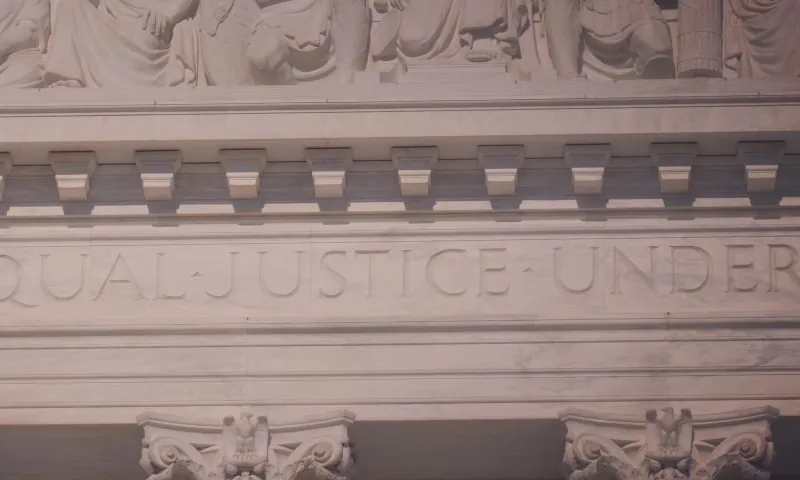
Washington, D.C., architecture often uses classical shapes to express national ideals. Indiana limestone fit that purpose because it was abundant, domestic, and tied to American labor and craft.
Imported European stone could have given buildings prestige, but domestic stone carried a different message. Indiana limestone allowed major civic architecture to look monumental while staying rooted in American resources.
Quarries, cutters, fabricators, railroads, and builders all connected the capital to a broader national economy.
Several symbolic meanings made Indiana limestone especially fitting for the capital:
- Domestic material tied federal buildings to American industry.
- Pale stone created a formal look associated with public authority.
- Long life supported ideas of civic stability.
- Skilled quarry and carving work connected national architecture to American craftsmanship.
Symbolic value matters in a capital city. Public buildings are not only places where work happens. They also communicate what a country believes about itself. Indiana limestone helped Washington express permanence, seriousness, and confidence through a material quarried and shaped in the United States.
Nickname “the Nation’s Building Stone” captures that dual role. Indiana limestone was practical, but it also became part of America’s civic image.
In Washington, the material made federal buildings feel ancient in style while still being American in origin.
Why Indiana Limestone Became Washington’s Building Block
Indiana limestone became common in Washington, D.C. because it answered practical and symbolic needs at once.
It was geologically strong, abundant, consistent, easy to carve, flame-resistant, and suitable for major public buildings.
Its quarry belt near Bloomington, Bedford, Owen, Monroe, and Lawrence counties supplied stone with more than 97% calcium carbonate. Properly shaped and installed, it could last 150 to 200 years with little maintenance.
Washington needed buildings that looked permanent, formal, and American. Indiana limestone gave the capital that look.