
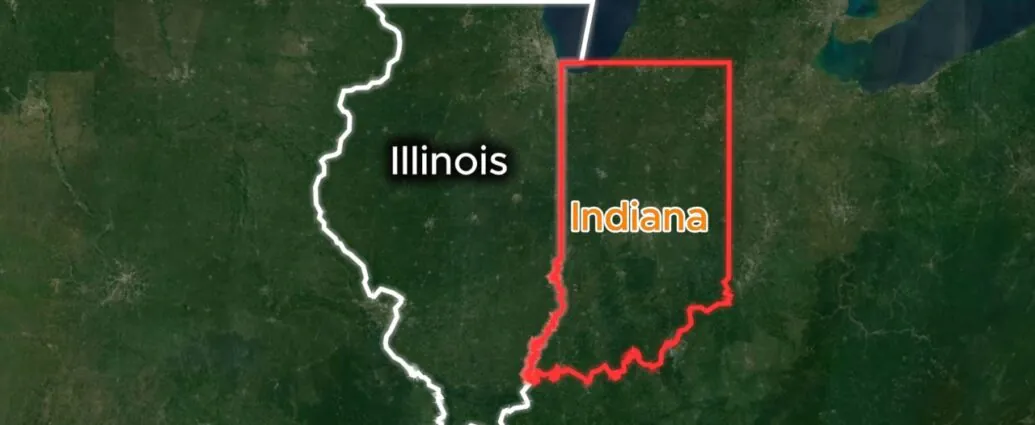
Indiana became the leading destination for Illinois residents who moved to another state in 2024. About 25,700 people relocated across the state line, placing Indiana ahead of Florida and Wisconsin.
Proximity plays a major role in that decision. Northwest Indiana gives households access to lower housing costs and a different tax environment while keeping Chicago jobs, relatives, and social connections within reach. Many residents can change states without giving up the region they already know.
Lower costs, available housing, employment shifts, and Indiana’s business policies all help explain why migration across the border has grown.
Illinois’ Out-Migration Trend
From the Editorial Board: After years of population decline, Illinois has now posted three consecutive years of growth. But that modest net decline masks a much bigger demographic shift. https://t.co/jTK02bMUHg
— Chicago Tribune (@chicagotribune) July 6, 2026
Illinois continues to lose more residents to other states than it gains. Approximately 283,300 people left Illinois for another state in 2024, while about 201,600 moved into Illinois.
Those movements produced a net domestic migration loss of roughly 82,500 residents. Illinois ranked 48th nationwide for domestic net migration and recorded a negative balance with 32 states and Puerto Rico.
Recent figures fit a much longer pattern. Between 1991 and 2009, Illinois lost a net 1.23 million residents to other states. Such sustained losses can affect local tax bases, housing markets, school enrollment, and the available workforce.
Movement does not occur for one single reason. Some households relocate to reduce monthly expenses. Others follow job opportunities, seek larger homes, retire in lower-cost communities, or move closer to family members.
Indiana benefits because it offers many of those advantages just across the border.
Lower Housing and Living Costs

Northwest Indiana often gives buyers more space for their money than nearby Illinois communities. Families may find larger homes, newer construction, and lower property-related expenses while keeping access to Chicago.
Commuting options make relocation practical for people who still work in Illinois. A household can purchase a home in Indiana and continue traveling to Chicago or its suburbs for employment.
Indiana officials have actively marketed the region to Illinois families and retirees. Promotional efforts have focused on lower taxes, more affordable housing, and easy access to Chicago.
Housing demand became so strong that one Northwest Indiana real estate official said builders could not construct homes quickly enough. Such pressure shows that cross-border migration is not limited to a small number of households.
Earlier migration research also connected Illinois population losses with lower taxes and housing expenses in destination states. Those findings relied on data collected during the 1990s and 2000s, but similar cost concerns still influence household decisions today.
Monthly savings can add up quickly. A lower mortgage payment, reduced property taxes, or cheaper everyday expenses may outweigh the inconvenience of a longer commute.
Jobs and Business Climate
View this post on Instagram
Employment changes also shape migration between Illinois and Indiana. Illinois lost 30 percent of its manufacturing jobs between 2001 and 2016. During that period, four out of five Illinois counties were losing population, including many communities that had long depended on manufacturing.
Factory closures and reduced industrial employment can push workers to search for opportunities elsewhere. Indiana has used lower operating costs, tax incentives, and industrial infrastructure to attract companies located near the state line.
Hoist Liftruck offers a clear example. Its move out of Illinois to East Chicago, Indiana, reportedly produced annual workers’ compensation savings of $1.75 million and state tax savings of $1.5 million. Indiana also provided $15 million in incentives connected to the relocation.
Company moves can influence household migration in several ways. Employees may follow their jobs, new hires may choose homes near relocated facilities, and related suppliers may open operations nearby.
Northwest Indiana also gives companies access to highways, rail lines, industrial sites, and the Chicago market. Such conditions can make the area attractive to manufacturers and logistics firms without placing them far away from existing customers or workers.
Job movement and residential movement often reinforce each other. New employers bring workers, workers create housing demand, and population growth supports additional businesses.
Education and Younger Residents

College decisions also contribute to Illinois population losses. Nearly half of Illinois public high school students who attended college selected an out-of-state institution in 2017. Fewer than 30 percent made that choice in 2002.
Illinois ranked second nationally in the loss of college students to other states. Indiana was one of the neighboring states that attracted more college students than it lost.
Leaving for college can become a permanent move. Students build friendships, professional networks, and personal ties near their campuses. Internship opportunities and first jobs can give graduates another reason to settle outside Illinois.
Indiana colleges may attract Illinois students because they are close enough for regular family visits. Crossing one state line can feel more manageable than moving across the country, especially for students attending school away from home for the first time.
Graduates who stay in Indiana add to its educated workforce. Illinois, meanwhile, loses some of the younger adults it helped educate through its public school system.
Population loss among young adults can have long-term effects. Fewer young workers may mean fewer future homeowners, parents, entrepreneurs, and taxpayers in Illinois communities.
Why Indiana Stands Out
Indiana received approximately 25,700 Illinois residents in 2024. Florida received about 24,400, while Wisconsin received around 24,000.
Around 14,100 Indiana residents moved in the opposite direction and settled in Illinois. Even after accounting for those arrivals, Illinois recorded a net loss of roughly 11,600 residents to Indiana.
Moving to Indiana does not always require a complete break with Illinois. Residents may continue working in Chicago, visiting relatives in nearby suburbs, using Illinois airports, or participating in organizations on both sides of the border. Such flexibility separates Indiana from more distant destinations. A move to Florida may require a new job, a new social network, and a major lifestyle change. A move to Northwest Indiana may involve little more than a new address and a longer commute. Cross-border relocation can therefore provide financial change without requiring complete regional separation. The Illinois-to-Indiana migration has several connected causes. Housing expenses, taxes, manufacturing losses, business relocations, and college enrollment patterns all influence where residents decide to live. Indiana’s strongest advantage is its location. Households can access a lower-cost housing market and a different business environment while staying close to Chicago. Migration numbers suggest that many Illinois residents see Indiana as a practical alternative rather than a distant destination. For families, workers, students, retirees, and companies, crossing the border may offer economic benefits without forcing them to abandon the wider Chicago region.
Closing Thoughts