
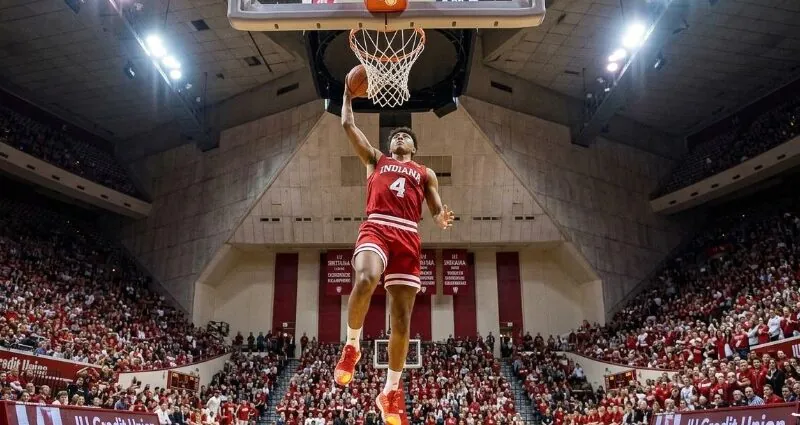
Friday night in Indiana can feel like a town meeting with a scoreboard. Packed bleachers, school colors, old banners, student chants, and family faces turn a high school gym into a shared stage.
Hoosier Hysteria means Indiana’s statewide passion for basketball, especially high school basketball.
Books, museums, public events, and historical collections preserve it because it is more than fandom. History of Our Hysteria: Indiana High School Basketball presents that tradition through historic images and stories.
Hoosier Hysteria is history, local identity, community pride, iconic gyms, legendary players, and a tournament tradition that made basketball feel like Indiana’s unofficial religion.
Let’s learn about it.
Why Basketball Took Hold in Indiana
Basketball fit Indiana early because it was practical. Small schools needed fewer players than football required. Cold Midwestern winters made indoor games useful. Small towns could compete without large rosters or expensive fields.
Several conditions helped basketball grow quickly across Indiana:
- Indoor courts made winter games easier to schedule.
- Smaller rosters gave rural schools a realistic path to compete.
- Local gyms gave towns a central place to gather.
- School teams gave communities a public source of pride.
High school basketball soon became a community event. Local gyms gave towns a place to cheer, remember, and compare each new team with older ones.
Historic photographs, old tournament stories, memorable teams, and community accounts created a long record of Indiana basketball memory.
Indiana’s basketball identity became so strong that the state has often been called the basketball capital of the United States. That label fits because school gyms, local newspapers, radio broadcasts, town pride, and postseason hope all helped build Hoosier Hysteria.
Small-Town Dream
Small towns gave Hoosier Hysteria its emotional core. A tiny school could believe it had a shot against anyone. Players were classmates, neighbors, sons, brothers, and friends. A winning team could give a small town statewide attention.
Milan High School became the defining example. In 1954, Milan won the state championship and created Indiana basketball’s most famous underdog story.
Its run helped inspire the 1986 film Hoosiers, which carried Indiana’s basketball image across the country.
Milan’s story matters because it made the small-school dream feel possible:
- Enrollment sat at only 161.
- Opponent Muncie Central came in as a much larger school.
- One title game became Indiana’s most famous basketball upset.
- One small town became a permanent part of Hoosier Hysteria.
Indiana’s old postseason format made that dream stronger. Tiny schools and major city schools played in one bracket. Knightstown later added another layer to that memory when its gym, used as the Hickory Huskers’ home court in Hoosiers, became part of Indiana basketball tourism.
Single-Class Tournament and Its Mythology
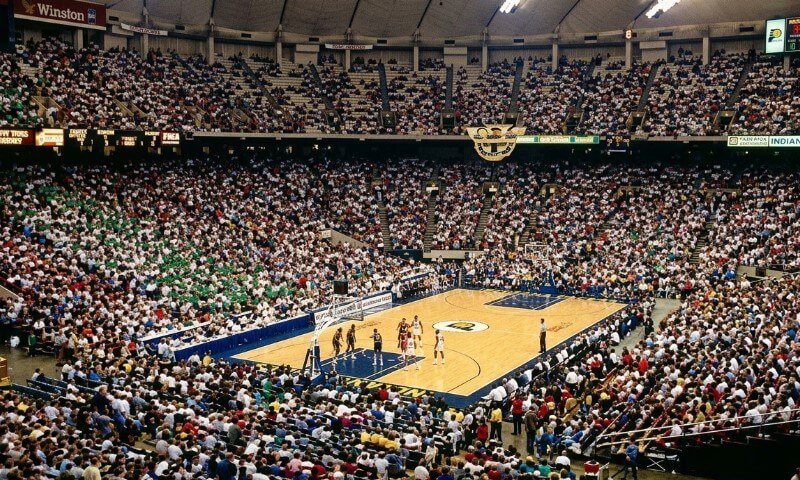
Indiana’s old single-class tournament gave Hoosier Hysteria much of its magic. Schools of every size competed for one state title. A small rural school could meet a big-city program with everything at stake.
That structure created classic underdog drama. Milan proved it in 1954, when a school with an enrollment of 161 defeated much larger Muncie Central.
Class basketball arrived in 1997 and 1998. Many people saw it as fairer. Others believed it weakened the old magic because small schools no longer had the same path to beat the largest programs for one shared title.
Old tournament mythology still carries weight because it gave every school a statewide dream:
- One bracket made every matchup feel connected.
- One title made the championship feel larger than class size.
- One upset could change how Indiana remembered a town.
- One postseason run could turn local players into state legends.
Hoosier Hysteria depends on that old possibility: any town, no matter how small, could matter across the Hoosier state.
Legendary Programs, Players, and Moments
Hoosier Hysteria lasts because stories move across generations. Franklin Wonder Five helped build Indiana high school basketball’s early reputation in the 1920s.
Milan became the small-school symbol. Crispus Attucks, led by Oscar Robertson, became one of Indiana basketball’s most important programs.
Damon Bailey and Bedford North Lawrence added another major moment with the 1990 championship run.
Certain names became part of Indiana basketball memory because they marked different eras:
- Franklin Wonder Five showed early statewide dominance.
- Milan showed a small-school possibility.
- Crispus Attucks added historic weight through Oscar Robertson.
- Damon Bailey showed how one player could become a statewide name before college.
Basketball culture in Indiana also includes objects, brands, and public memory. A basketball history event included the exhibit Chuck Taylor All Star and a storytelling program titled Chuck Taylor Converse All Star: The Man Who Made the Shoe.
Another program, Going Pro: Basketball Origins in Indiana, connected school gym memories with larger basketball history.
Together, these examples show why Hoosier Hysteria is passed down instead of casually followed.
Cathedrals of the Game: Indiana’s High School Gyms
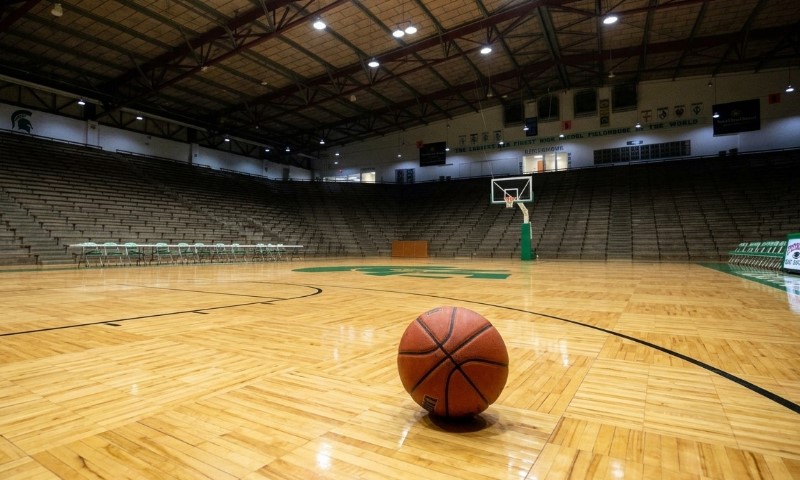
Indiana high school gyms are memory keepers. Size, sound, banners, and crowds show how seriously towns treat basketball.
New Castle Fieldhouse is one of the clearest symbols. Its scale shows how much Indiana built around high school basketball. New Castle’s connection to the Indiana Basketball Hall of Fame area also links gym culture with historical memory.
Knightstown’s Hoosier Gym adds film history to real basketball culture. Used as the Hickory Huskers’ court in Hoosiers, it became one of Indiana’s most recognizable basketball sites.
Hoosier Hysteria needs these gyms because they make basketball memories physical. People do not only remember games. They remember seats, sounds, exits, warmups, banners, and the feeling of a full building before tipoff.
College and Statewide Connection
High school Hoosier Hysteria connects to college basketball, especially Indiana University. Many fans grow up in local gyms, then carry that passion into college arenas and statewide events.
IU’s Hoosier Hysteria event marks the emotional start of basketball season. Its announcement tells fans the season is near. Fans, players, staff, and families gather before games begin.
Several details show how the college version builds on the same emotional pattern:
- Fans arrive early and wait in line.
- Families treat the event as part of basketball season.
- Cream and crimson fill the arena.
- Recruits see crowd energy before official games begin.
- Renovated facilities and visual displays turn school pride into a recruiting message.
Crowd energy also works as a recruiting tool. Long lines, family attendance, and a sea of cream and crimson show recruits that basketball means more in Indiana.
High school, college, and pro basketball all strengthen the state’s identity. A player can begin in a local gym, become a statewide name, draw college attention, and enter a bigger basketball story.
Why Hoosier Hysteria Still Matters Today
Hoosier Hysteria has changed. School consolidation reduced small-school numbers. Class basketball changed the postseason. AAU, recruiting coverage, streaming, and social media changed how fans follow players.
Core traditions still hold. Town pride matters. Big games still fill gyms. Families still plan nights around basketball. Rivalry games still feel like community events. Old stories still shape new seasons.
Public history keeps Hoosier Hysteria visible. On October 19, 2023, a basketball history event at the Eugene and Marilyn Glick Indiana History Center in Indianapolis included exhibits, collection items, storytelling, and public programming.
Program timing gave the night a clear structure:
- Exhibit time ran 5:30 to 7 p.m.
- A Chuck Taylor storytelling presentation ran 7 to 8 p.m.
- Collection items connected basketball objects with state memory.
- Public programming treated basketball as cultural history, not only entertainment.
Modern fan rituals keep the energy alive, too. People arrive early, wait in line, bring family, wear team colors, and treat basketball events as signs of a new season.
Hoosier Hysteria still gives Indiana a shared language. Basketball explains pride, memory, rivalry, family, and place.
The Obsession That Became an Identity
A packed Indiana gym says more than a final score. Banners, noise, families, rivals, and old stories all meet in one room.
Hoosier Hysteria is about memory, belonging, pride, and tradition. Historic images, museum events, storytelling programs, fan rituals, recruiting energy, and family attendance all point to the same idea.
In Indiana, high school basketball is not simply watched. It is inherited.