Parke County, Indiana, calls itself the Covered Bridge Capital of the World, and the name makes sense quickly.
With 31 historic covered bridges, the county turns a fall drive into a full road trip across rural roads, creeks, mills, villages, and festival stops.
A visit is not just about photographing old bridges. It is about slowing down, crossing wooden floors, stopping near water, walking through small towns, and seeing how much local history still sits along the road.
Even after miles of driving and bridge after bridge, Parke County feels worth repeating.
Why Parke County Is Famous for Covered Bridges
Parke County is promoted as home to Indiana’s Largest Festival and as the Covered Bridge Capital of the World because it has 31 covered bridges.
Annual attention peaks during the Parke County Covered Bridge Festival, a county-wide fall event built around the bridges and the communities around them.
Each year, the festival begins on the second Friday in October and lasts 10 consecutive days. For 2026, official festival dates are October 9 through October 18.
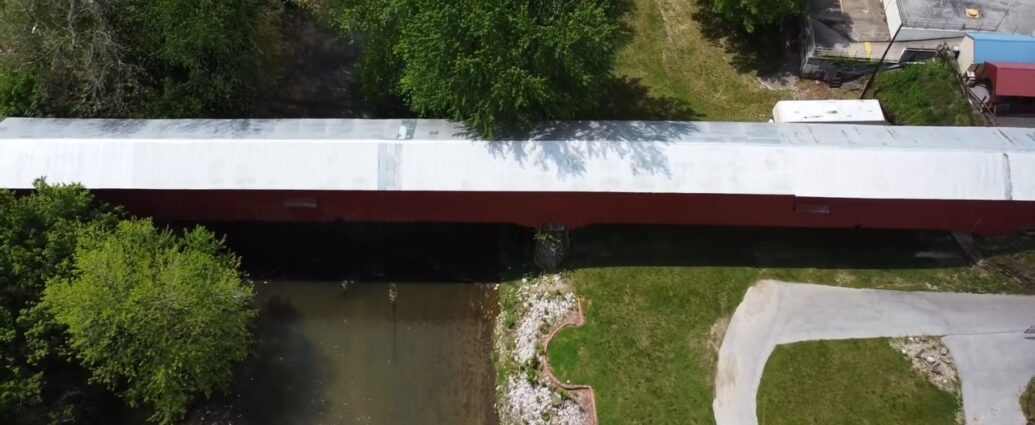
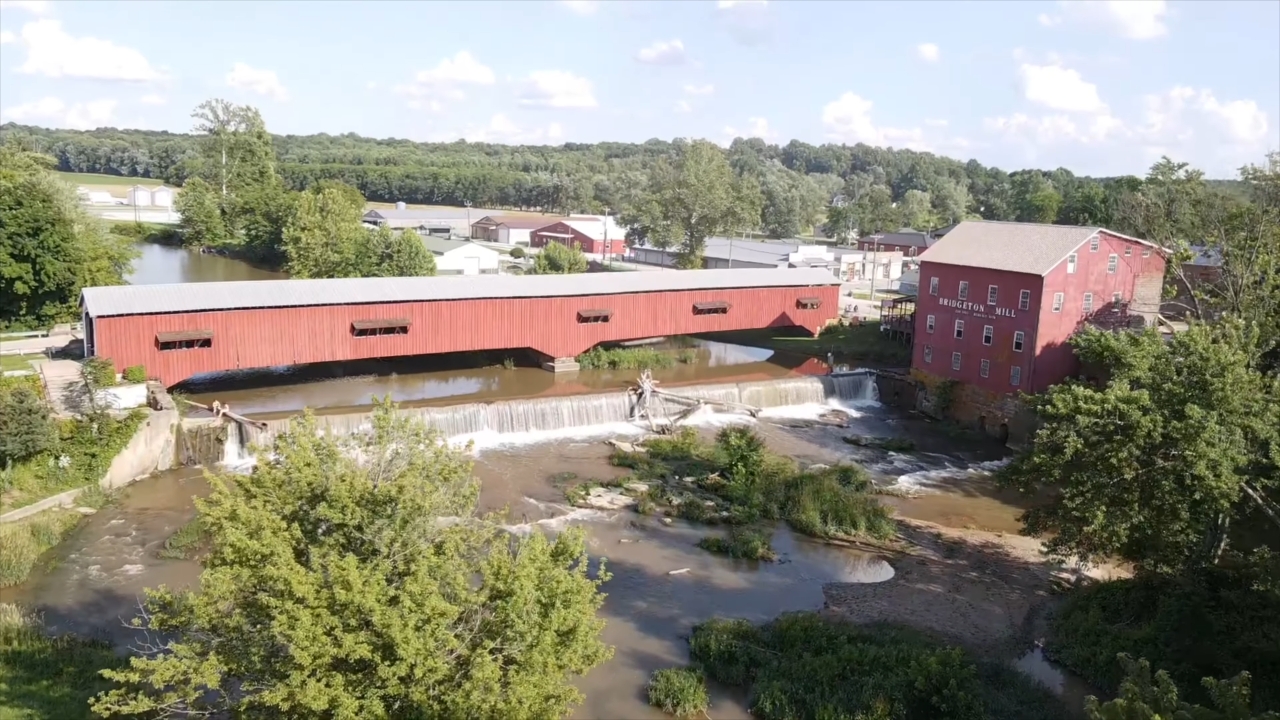
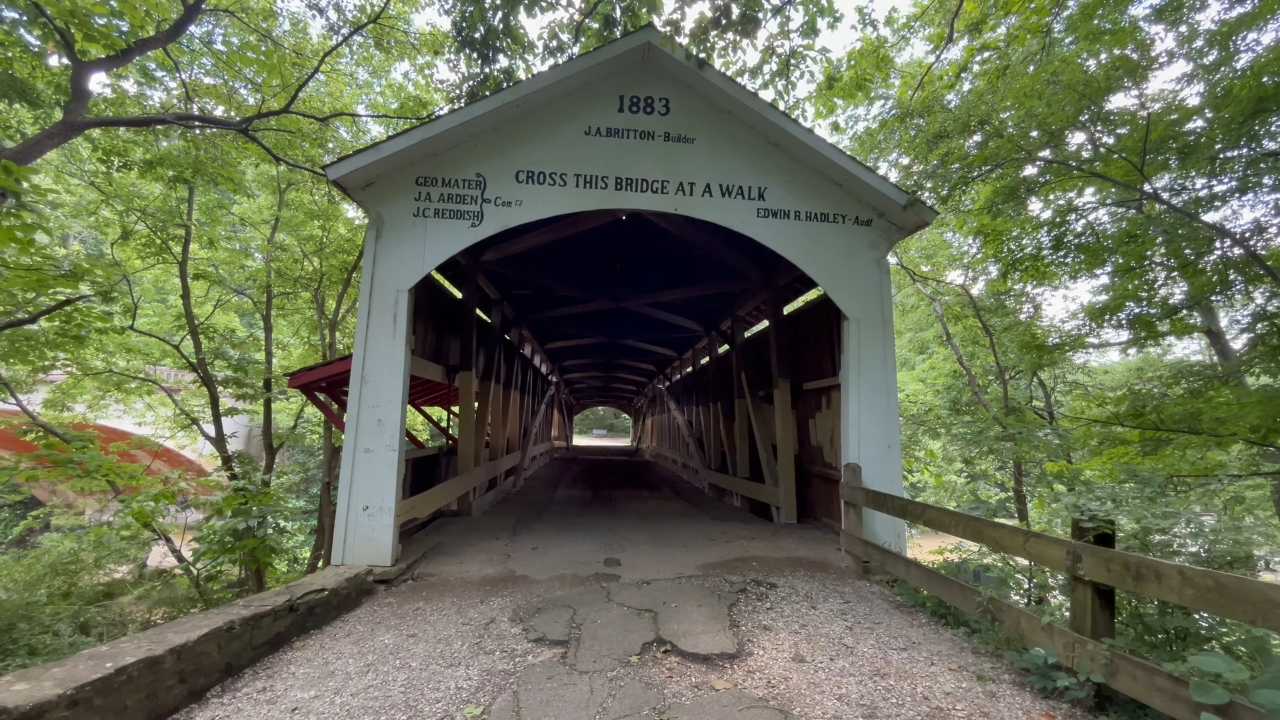
Crowds come for the bridges, but they also come for fall color, crafts, local food, antiques, historic buildings, and small-town stops. Official festival information lists 10 festival locations, with each community offering a different focus. Rockville is the official festival headquarters, with crafts, food, antique stores, art galleries, wood carving demonstrations, restaurants, and the Historic Ritz Theater. Billie Creek Village features three covered bridges, historic buildings, a general store, a schoolhouse, handmade crafts, shopping, and food. Bloomingdale is known for homemade apple butter, local crafts, desserts, maple syrup, and the historic Friends Meeting House, also called the Quaker Church. Mecca includes the 1872 Mecca Covered Bridge, a historic one-room schoolhouse, local crafts, and Parke County’s oldest operating tavern. Montezuma offers Wabash and Erie Canal tours, roast hog, crullers, cider, iron pot ham and beans, antiques, crafts, demonstrations, camping, and free parking. Tangier is known for buried beef, homemade pies and cakes, local crafts, and five nearby covered bridges. Festival stops add more than shopping and food. They make the bridge routes feel connected to living communities instead of isolated roadside sites. Parke County’s bridge trip is organized around five color-coded driving routes. Free maps and color-coded signs help visitors move bridge to bridge without turning the day into guesswork. Seeing all 31 bridges takes time. Combined mileage for all five routes is 161 miles, and one traveler spent two days in the area while seeing about 12 covered bridges and two festival locations. That makes a full bridge trip better suited to a slow itinerary than a quick stop. Roads are part of the experience. Some are narrow and winding, almost all are paved, and many pass through farm country, creek bottoms, and quiet rural stretches. A slower pace fits the place better than rushing through the list. Covered bridges could sound repetitive, but Parke County avoids that problem because each stop has a different setting. Some bridges can be crossed by car. Others are better experienced by parking nearby and walking across. Bridge stops also carry an educational side. Visitors can read about dates, builders, repairs, fires, construction styles, and creek crossings at different locations. Mansfield shows how closely the bridges connect to local geography. Located along Big Raccoon Creek, just south of Raccoon State Recreation Area, it ties a covered bridge to water, milling, village history, and rural Indiana scenery. Bridgeton is one of Parke County’s strongest bridge stops. One traveler describes Bridgeton Covered Bridge as Indiana’s most popular covered bridge, and the surrounding village adds to the experience. Fire destroyed the bridge in 2005. Local effort brought it back in 2006. Visitors can see actual pictures of the fire on site, which gives the stop a clear story of damage, rebuilding, and preservation. Bridgeton Mill sits nearby and is still in operation. Visitors can tour it and buy products made in the mill. Around it, Bridgeton’s historic district includes the working Bridgeton Mill and Covered Bridge, Collom’s General Store, the 1878 House, Case Log Cabin, and the Bridgeton School. During the Covered Bridge Festival, Bridgeton adds handmade crafts, fine art, specialty products, a food court, live entertainment, and a busy vendor area. For visitors who want more than a quick bridge photo, Bridgeton delivers one of the county’s fullest stops. Mansfield is another major Parke County stop because it brings together Big Raccoon Creek, a historic mill, shops, a village setting, and the county’s longest covered bridge. Over time, Mansfield has been known by several names: New Dublin, Dickson Mills, Strains Mills, Mansfield Mills, and at one point, Frontier City was considered. Those names fit a place shaped by water power and milling. Mansfield Roller Mill dates to 1820, when James Kelsey and Francis Dickson built it as a grist mill. Water supplied by the Big Raccoon Creek Dam powered the grinding process. The National Register of Historic Places listing came in 1990. Interior access is limited to a few times each year, including the Mansfield Village Mushroom Festival, Beans and Cornbread Day, and the Parke County Covered Bridge Festival. Visitors can still view the historic site year-round. Later history adds another layer. Actor Edward “Tex” Terry bought the mill in the 1970s with hopes of turning Mansfield into a working frontier town. By the 1990s, the Dalton and Hutcheson families donated the mill to the Indiana DNR. Mansfield Covered Bridge is Parke County’s longest covered bridge at 279 feet. Built in 1867 by Joseph Daniels, it is a double burr arch, double-span truss bridge over Big Raccoon Creek. National Register listing came in 1978, with repairs completed in the 1980s. Cars can cross the bridge, but walking gives a better sense of its length and creek setting. During the Covered Bridge Festival, Mansfield Village has hundreds of vendors, festival food, antique shops, craft shops, the Historic Mansfield Roller Mill, and the covered bridge. Parke County’s covered bridges work best at a slow pace. A full route covers 161 miles, and even two days may only cover part of the county’s 31-bridge collection. That is part of the reason to go back. Another visit means another route, another town, another mill, another creek crossing, and another bridge seen in a different light. Parke County makes an old-fashioned road trip feel new again. Yes, driving past every covered bridge more than once would be worth it.
Covered Bridge Festival Atmosphere
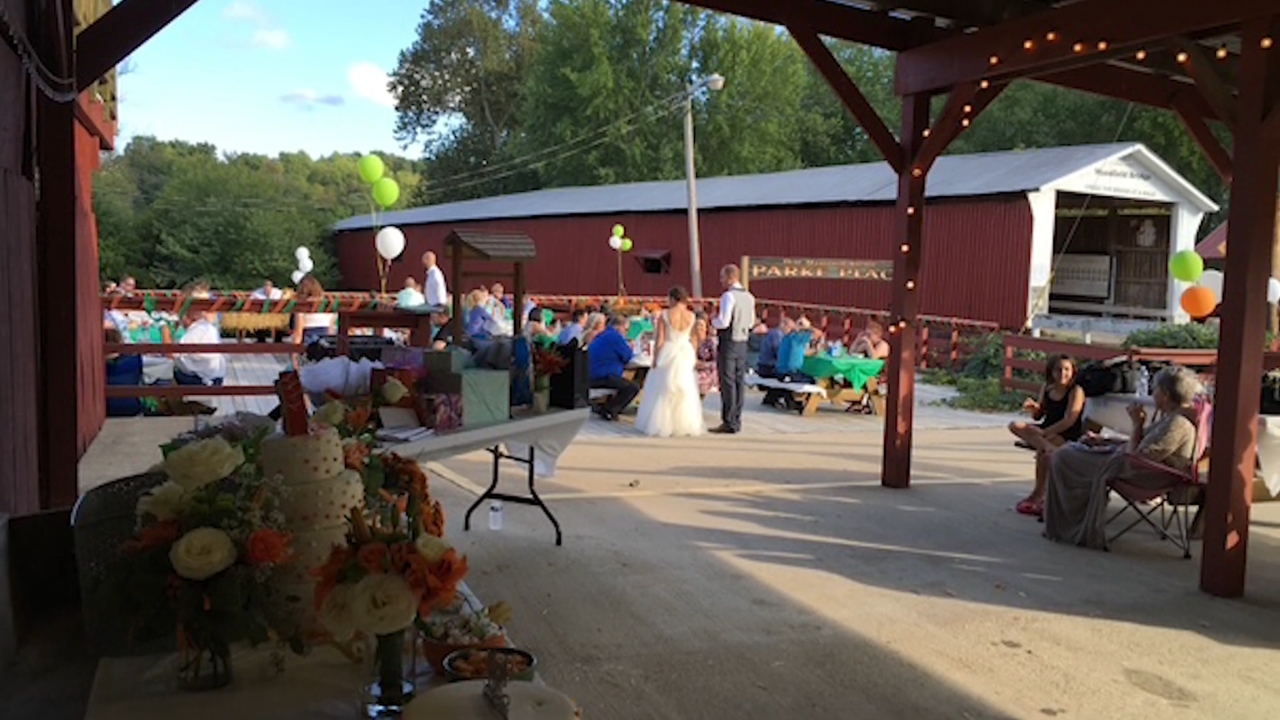
October gives Parke County its busiest season. During the Covered Bridge Festival, roads fill with visitors moving between bridges, vendor areas, food stands, antique shops, demonstrations, and historic sites.Five Routes, 161 Miles, and No Need to Rush
What Makes Each Stop Memorable
Bridgeton Covered Bridge and Mill
Mansfield Village and Mansfield Covered Bridge
Closing Thoughts