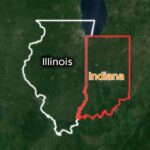
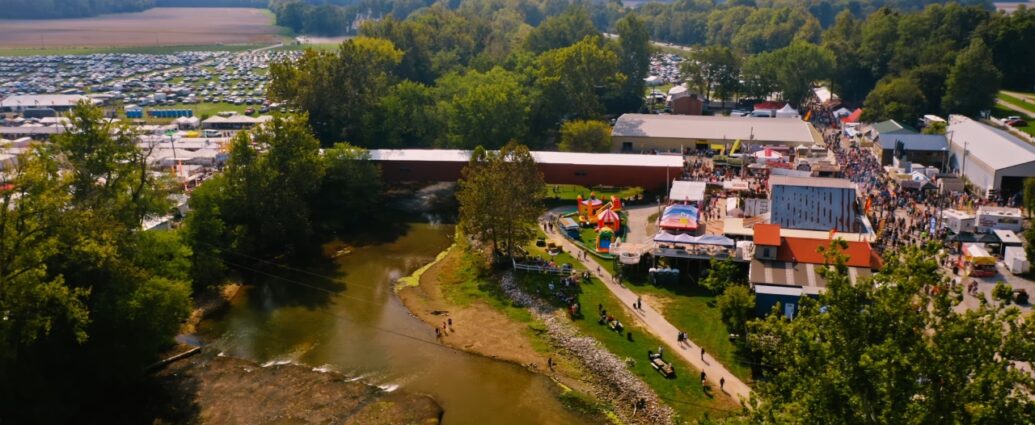
More than 2 million people reportedly visit Parke County each fall for Indiana’s largest festival. Yet many travelers outside Indiana and nearby states have never heard of the Parke County Covered Bridge Festival.
Historic bridges, bright fall colors, local cooking, craft markets, and small-town traditions fill ten busy October days. Rather than gathering inside one fairground, visitors travel across the county, following rural roads between participating communities.
Few Indiana events match its size or character.
What the Covered Bridge Festival Is
Parke County Covered Bridge Festival takes place over ten days each October. Festivities traditionally begin on the second Friday of the month.
Activities take place across several towns and rural communities.
Rockville, Bridgeton, Mansfield, Tangier, Rosedale, Bloomingdale, and other locations host markets, demonstrations, meals, and historical attractions.
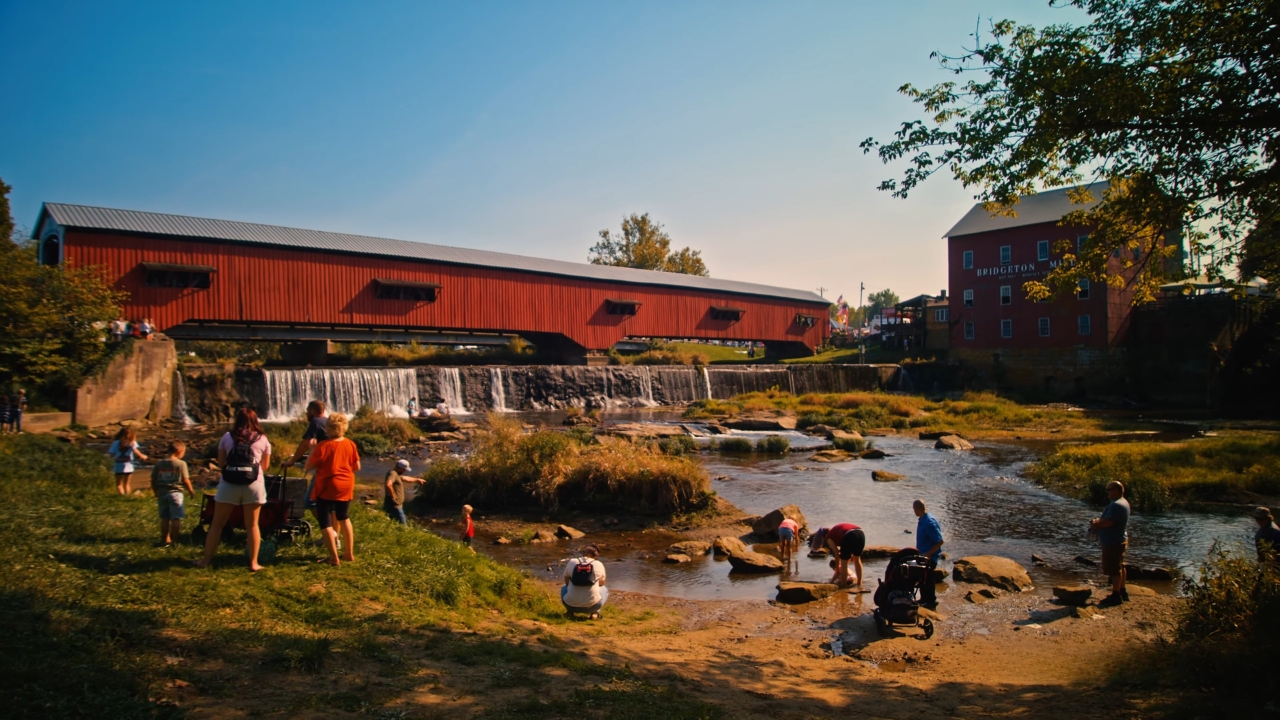
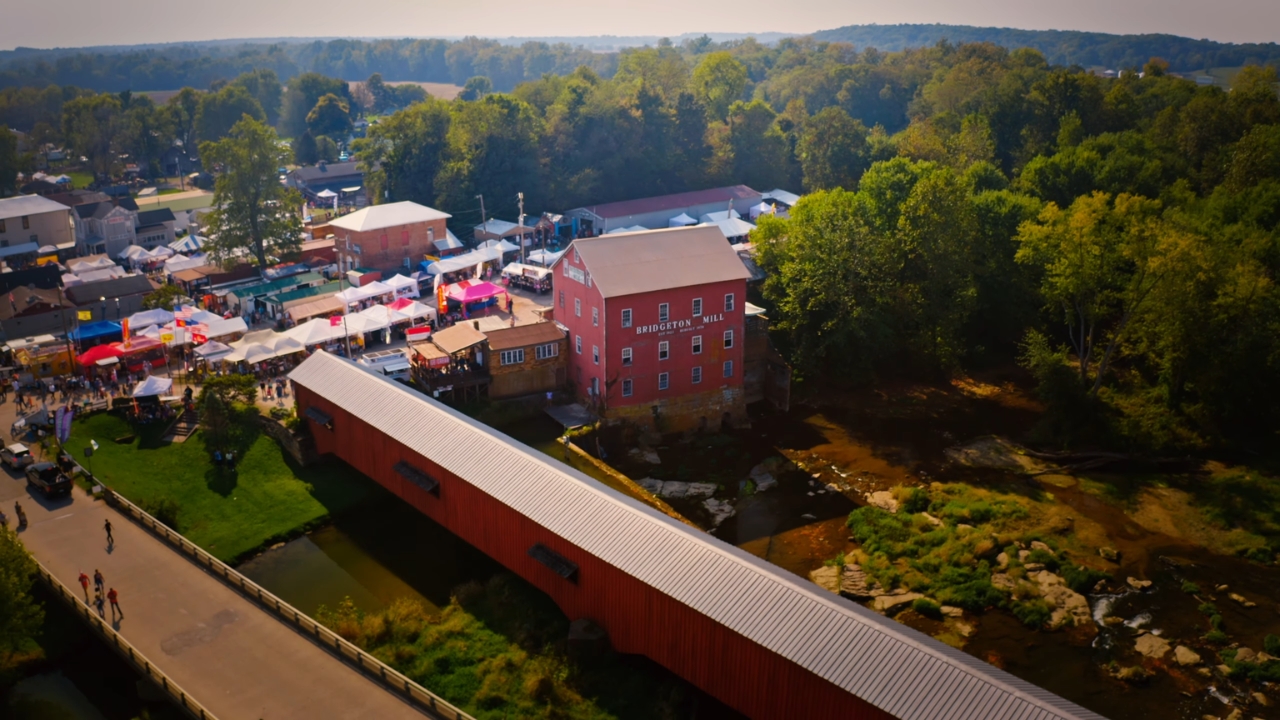
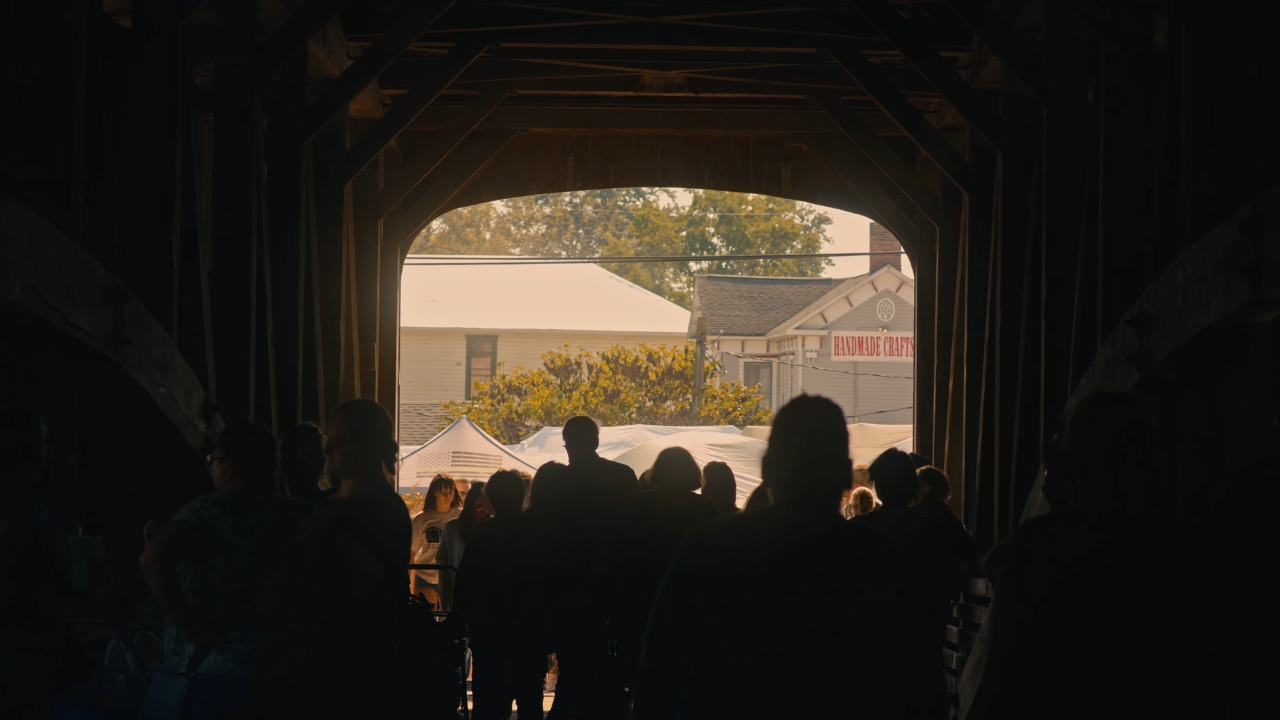
Every location develops its own atmosphere. One town may focus on craft booths, while another centers its program around food, historic buildings, or live demonstrations. Such variety encourages visitors to travel rather than stay in a single place. Parke County is known as the “Covered Bridge Capital of the World.” It’s 31 covered bridges represent the largest number still surviving in any county in the United States. Builders added roofs and walls to protect wooden bridge components against rain, snow, and sun exposure. Uncovered wooden structures deteriorated more quickly, while covered designs often lasted much longer. Wooden trusses, weathered siding, and rural settings have made these structures central to Parke County’s identity. Festival history reaches back to 1957, when former Rockville resident Mrs. Charles Cole brought friends to Parke County to see its covered bridges. Parke County had 41 covered bridges at that time. Limited maps and poor road signs made it difficult to locate, and her group managed to find only 20. Mrs. Cole complained about the lack of visitor information. Her experience helped inspire local organizers to create a festival the following year. Early celebrations lasted only three days. Growing attendance gradually transformed that small event into a ten-day celebration involving communities across Parke County. Bridge tours continued, while craft markets, food stands, antique sales, and community activities became major parts of the program. Planning a route around two or three key towns makes it easier to experience the Covered Bridge festival without spending most of the day in traffic. Rockville, the Parke County seat, provides a practical starting point for first-time visitors. Courthouse-square activities, restaurants, antique dealers, and woodcarving demonstrations create a busy central gathering area. Festival information is easier to find in Rockville, making it helpful for planning routes to other communities. Visitors can begin there before heading toward bridges and markets elsewhere in the county. Bridgeton combines a historic district, major craft market, covered bridge, and working mill in one popular stop. It is considered the oldest continually operating mill in the Midwest. Its setting beside the bridge creates one of the festival’s most recognizable scenes. An original covered bridge built in 1868 was destroyed by arson in 2005. Community members rebuilt it in 2006 with donated labor and materials, restoring an important part of Bridgeton’s historic center. Mansfield is best known for its enormous vendor selection. Booths cover a large area and sell crafts, antiques, clothing, decorations, food, and many other items. Shopping can easily take several hours. Comfortable shoes and a clear meeting point are useful for groups visiting the crowded market. Smaller communities add local traditions that help distinguish each stop. Such community specialties reward visitors who travel outside the largest festival centers. Festival visitors do not have to choose between sightseeing and shopping. Both activities are part of the same experience. Five suggested driving routes guide travelers toward the county’s 31 bridges. Roads pass through farmland, wooded areas, small towns, and colorful autumn scenery. Local meals and small roadside stops make driving between communities part of the event rather than simple transportation. Shopping has become one of the strongest attendance drivers. Many visitors now come mainly for crafts, antiques, collectibles, and seasonal goods, even when bridge touring is not their main priority. Changing locations also keeps the festival experience varied. A morning might begin with bridge photography, followed by lunch in a small community and an afternoon at a large vendor market. Large attendance creates practical difficulties, especially during busy weekends. Narrow country roads can become congested as cars move between towns and bridge sites. Agricultural vehicles may also use these roads during harvest season. Slow traffic, limited passing areas, and temporary route changes can make short distances take longer than expected. Parking fills quickly near Bridgeton, Mansfield, and other popular locations. Some spaces may require a long walk to the main activity area. Seeing every community and all 31 bridges in one day is not realistic. A weekend stay gives travelers more flexibility and allows them to visit both major markets and quieter bridge locations. A rural setting and countywide format help explain why such a large festival receives limited attention outside the region. No single entrance, fairground, or central venue captures its full scale. An effort to help tourists find covered bridges grew into a massive annual celebration of Parke County history, food, craftsmanship, and community traditions. Scenic roads, preserved bridges, historic mills, local markets, and distinctive meals create an October event unlike a standard county fair. Millions of visitors already know its value, even though much of the country has yet to discover it.
Why Covered Bridges Matter
How did the Covered Bridge Festival Begin
Main Attractions
Major attractions are spread across Parke County, with each community offering a different reason to stop. Some locations focus on large vendor markets, while others draw visitors with historic structures, regional food, craft demonstrations, or covered bridge views.Rockville
Bridgeton
Mansfield
Other Festival Communities
Why It Is So Popular
Challenges for Visitors
Conclusion