
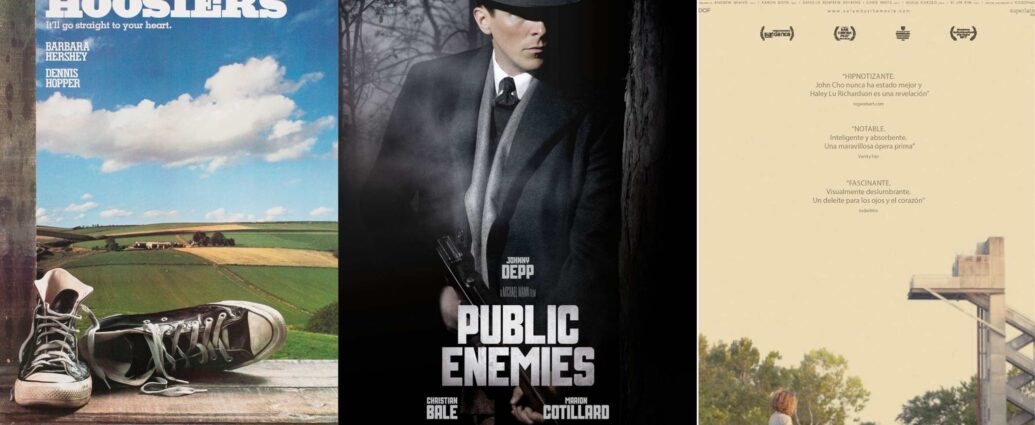
Indiana has a better movie history than many people expect. The state has never been known as a film capital, but it has given directors places that look specific, useful, and easy to believe on screen.
Old basketball gyms. College streets in Bloomington and South Bend. Baseball parks in Huntingburg and Indianapolis. The Indianapolis Motor Speedway. The old jail in Crown Point. The modern buildings in Columbus. Those locations are the reason Indiana keeps showing up in film history.
The best movies filmed in Indiana usually work for a simple reason: the locations matter to the story. Hoosiers needed an Indiana gym. Breaking Away needed Bloomington. Rudy needed Notre Dame. Public Enemies needed Crown Point because John Dillinger history belongs there. Columbus needed a city where architecture could carry the mood of the film.
One thing should be clear before the list starts. Movies set in Indiana and movies filmed in Indiana are not the same. A Christmas Story is the best example. The story is tied to Hammond through Jean Shepherd, but the movie was filmed mainly in Ohio. For a filming-location list, it belongs in the commonly mistaken category.
Here is a clear list of famous movies and major productions filmed in Indiana, with the main locations, useful background, and reasons each one still matters.
Quick List of Famous Movies Filmed in Indiana
| Movie | Release Year | Main Indiana Filming Locations | Why It Matters |
| Hoosiers | 1986 | Knightstown, Indianapolis, New Richmond | Indiana basketball culture on film |
| Breaking Away | 1979 | Bloomington, Indiana University area | Bloomington and Little 500 culture |
| Rudy | 1993 | Notre Dame, South Bend | Notre Dame football story filmed on campus |
| A League of Their Own | 1992 | Huntingburg, Evansville | Indiana baseball landmarks on screen |
| Public Enemies | 2009 | Crown Point | Dillinger history and the old Lake County jail |
| Columbus | 2017 | Columbus | Modern architecture used as part of the story |
| Blue Chips | 1994 | Frankfort, French Lick | College basketball drama with Indiana locations |
| Hard Rain | 1998 | Huntingburg | Action thriller using an Indiana town |
| Eight Men Out | 1988 | Indianapolis | Period baseball scenes built around old Bush Stadium |
| Soul of the Game | 1996 | Huntingburg | Negro League story filmed at League Stadium |
| Going All the Way | 1997 | Indianapolis | Indianapolis used as the main setting |
| Winning | 1969 | Indianapolis Motor Speedway | Racing drama connected to the Indy 500 |
1. Hoosiers (1986)
No movie is tied to Indiana basketball more than Hoosiers. The story is simple, but the locations make it feel honest.
The Hickory Huskers home court was filmed at Hoosier Gym in Knightstown. The championship scenes were filmed at Hinkle Fieldhouse in Indianapolis. Get Indiana and Butler still point visitors to both places.
Hoosier Gym matters because it looks like the kind of place where Indiana basketball history would happen. The court is small. The seating is close. The building has age. The movie uses all of that. You can feel how much pressure a game would carry in a room where everyone knows everyone.
Hinkle Fieldhouse gives the movie a different scale. The move from a small-town gym to a major Indianapolis fieldhouse shows what the state finals meant. For a small school, reaching that floor was more than a basketball moment. It was a town event.
New Richmond also helped create the fictional town of Hickory. The streets, houses, and rural roads gave the film a plain Indiana look. The movie does not feel overbuilt because many of the places were already right for the story.
Hoosier Gym is still one of the best Indiana movie locations to visit. Fans can see the court, the stands, and the building that made the Hickory scenes work.
Hoosiers lasts because it understands the state. The film does not turn Indiana basketball into a costume. It shows the gym, the town, the crowd, and the pressure in a way that still feels familiar.
2. Breaking Away (1979)
Breaking Away belongs to Bloomington. Another college town would have changed the movie.
Indiana University library material connects the film with the Little 500, and Visit Bloomington still lists places from the movie, including the Indiana Memorial Union and the Rose Well House.
The film is known as a cycling movie, but the better story is about class, pride, and young men trying to figure out where they fit. The Cutters live beside Indiana University, close to campus life but outside of it. That tension gives the movie more weight than a basic sports story.
Bloomington gives the film its shape. Campus scenes show the university world. The quarry scenes show another side of southern Indiana. Neighborhoods, roads, and local hangouts keep the story grounded.
The limestone country around Bloomington also matters. It gives the film a look that feels local. The roads, stone, water, and campus buildings all belong to the same part of Indiana. Nothing feels borrowed from somewhere else.
Breaking Away won the Academy Award for Original Screenplay. The race scenes are memorable, but the writing and the Bloomington setting are the main reasons the film still holds up.
For visitors, Breaking Away is one of the easiest Indiana film-location stories to follow. Many recognizable places sit around Indiana University and central Bloomington.
3. Rudy (1993)
Rudy needed Notre Dame. The movie depends on the campus, the stadium, and the idea that this place meant everything to the main character.
Notre Dame archival material notes that the film was shot on campus over several weeks. The famous final scene was filmed during halftime of the 1992 Notre Dame versus Boston College game.
The Joyce Center also hosted several scenes, including training-room scenes and the moment where Rudy learns he made the team.
The final stadium scene works because the crowd was there. The movie used the sound and size of a Notre Dame football day instead of trying to create it from nothing. That gives the ending its force.
South Bend and the Notre Dame campus give the film a clear identity. The stadium, the walkways, the athletic buildings, and the campus views all tell the viewer what Rudy is chasing.
Rudy was one of the rare films allowed to shoot on the Notre Dame campus. That access helped the movie feel connected to the place rather than staged around it.
For Indiana film history, Rudy matters because Notre Dame is more than a setting. The campus is the goal, the obstacle, and the reward.
4. A League of Their Own (1992)
League Stadium in Huntingburg is one of the best movie locations in Indiana. Official Huntingburg pages state that Columbia Pictures renovated and expanded the original field and grandstand in 1991 for A League of Their Own. The ballpark was used as the home field for the Rockford Peaches.
The stadium already had the right look for a baseball film set in the 1940s. It did not need to look perfect. It needed to look like a working ballpark with age, wood, space, and history. Huntingburg gave the movie that.
The film also used Evansville as part of its Indiana production footprint. Together, those southern Indiana locations helped create the baseball world of the movie without making it feel too polished.
A League of Their Own remains one of the best-known baseball movies ever made, and League Stadium still benefits from that connection. The field is not just a place where filming happened. It is part of the way people remember the movie.
Original advertisements from the movie still remain along the outfield fence at League Stadium, which makes the site especially interesting for film fans.
For anyone building an Indiana movie-location trip, Huntingburg should be near the top of the list. League Stadium is easy to understand as soon as you see it.
5. Public Enemies (2009)
Public Enemies brought a different kind of Indiana history to the screen. The film used Crown Point, where John Dillinger was jailed before his famous 1934 escape.
Michael Mann used the old Lake County jail tied to that story. That matters because Crown Point was not just pretending to be part of the Dillinger story. The town was already part of it.
The movie benefits from that connection. Period costumes and old buildings can help any crime drama, but Public Enemies had access to a place connected to the event being shown. That gives the Crown Point scenes added weight.
Dillinger history still draws visitors to the old jail. People come for the cell, the escape story, and the link between the town and one of the most famous crime stories in America.
The Crown Point escape is still one of the best-known Dillinger stories, partly because of the wooden-gun legend connected to it.
For Indiana film history, Public Enemies is important because it shows the state offering more than a good-looking street. Indiana gave the film a location with actual historical meaning.
6. Columbus (2017)
Columbus is one of the most visually interesting films made in Indiana. Visit Columbus states that Kogonada’s 2017 film was filmed entirely in Columbus, Indiana, and used the city’s modern architecture as a major part of the movie.
The film stars John Cho and Haley Lu Richardson. The story follows a man who stays in Columbus while his father is in the hospital and a young woman who knows the city well but feels unsure about her future there.
Architecture is not background in Columbus. Buildings shape the way people talk, pause, walk, and think. The movie gives viewers time to look at the city, and that patience is one of the reasons the film stands apart from other Indiana productions.
Columbus has long been known in design circles for its modern buildings. The movie helped bring that reputation to a wider audience. Viewers who may know Indiana through basketball, racing, or small towns see another side of the state here.
Columbus is one of the best Indiana films for travelers who care about architecture. The city promotes both its design history and its connection to the movie.
For this list, Columbus is important because it proves Indiana film history is not only about sports. The state can also carry a careful, visually focused drama.
7. Blue Chips (1994)
Blue Chips is another basketball movie with Indiana locations, but it has a different mood from Hoosiers. Instead of small-town belief and high school pride, Blue Chips looks at pressure, recruiting, boosters, money, and college basketball politics.
Filming records point to Frankfort Senior High School and French Lick as Indiana production sites. French Lick Resort has also written about the production bringing actors, extras, and basketball figures into town.
The Indiana locations fit the subject. Frankfort gave the production a gym setting that felt right for basketball scenes. French Lick added another layer because the town already has a major basketball association through Larry Bird.
The cast also makes the movie a clear 1990s basketball time capsule. Nick Nolte plays the coach, while Shaquille O Neal and Anfernee Hardaway appear during the early part of their basketball fame.
Blue Chips belongs on the list because Indiana basketball culture helps the movie feel more convincing.
8. Hard Rain (1998)
Hard Rain is one of the more unusual Indiana entries on the list. It is an action thriller about an armored-truck robbery during a major storm, and Huntingburg was one of the filming locations.
The movie stars Christian Slater, Morgan Freeman, Randy Quaid, and Minnie Driver. Huntingburg tourism pages still mention the film alongside A League of Their Own and Soul of the Game.
Hard Rain gives Huntingburg a very different screen identity. In A League of Their Own, the town helped create a baseball past. In Hard Rain, it became part of a flood thriller with water, danger, and crime.
The production used major water effects and set work, with some filming handled away from Indiana. Even so, Huntingburg remains an important part of the movie’s location story.
The film was originally developed under the title The Flood. That title explains the main idea of the movie immediately.
Hard Rain may not be the first title people name when they talk about Indiana movies, but it adds range to the list. Indiana locations have supported more than sports stories and period pieces.
9. Eight Men Out (1988)
Eight Men Out brought another baseball story to Indiana. The film, directed by John Sayles, tells the story of the 1919 Black Sox scandal and the players accused of helping fix the World Series.
Reporting on Indianapolis film history notes that much of the filming took place at old Bush Stadium and other downtown locations. Visit Indiana adds that some interior shots were filmed at the Athenaeum.
Bush Stadium was valuable because it already had the look of an older baseball park. A story set around 1919 needed age, shadows, wood, brick, and a field that did not look modern. Indianapolis gave the movie that.
The city locations also helped the film avoid a clean period-postcard look. Eight Men Out is about money, pressure, gambling, and unfair treatment. Older Indianapolis spaces matched that mood.
Bush Stadium later went through major changes after professional baseball left. Eight Men Out now helps preserve how the old park looked on film.
For Indiana movie history, Eight Men Out shows how Indianapolis could provide useful period locations for a national baseball story.
10. Soul of the Game (1996)
Soul of the Game belongs here even though it was an HBO film instead of a theatrical release. Official League Stadium pages from Huntingburg state that the movie was filmed there in 1995.
The film focuses on Negro League baseball and the period when Major League Baseball began to integrate. Delroy Lindo, Blair Underwood, and Mykelti Williamson lead the cast.
League Stadium worked for this story because it could stand in for older baseball settings without looking artificial. The same ballpark that helped A League of Their Own recreate women’s baseball in the 1940s also helped Soul of the Game tell a story connected to Black baseball history.
That is why League Stadium matters so much in Indiana film history. The place has been useful for more than one kind of baseball story.
Soul of the Game adds depth to this list because it covers a serious part of baseball history and uses an Indiana location with care.
11. Going All the Way (1997)
Going All the Way gives Indianapolis a rare chance to appear as itself in a character-driven movie. The film is based on the Dan Wakefield novel and follows two Korean War veterans returning to Indianapolis during the 1950s.
The movie stars Jeremy Davies and Ben Affleck, with Rose McGowan and Amy Locane also in the cast. Reference material on the film notes that it was shot on location in Indianapolis, and Indiana tourism writing has connected the production to places such as Fountain Square, Union Station, the Athenaeum beer garden, and local school locations.
The setting matters because the story is about young men trying to fit back into civilian life. Indianapolis gives the film neighborhoods, public spaces, bars, schools, and streets that match that kind of story.
Going All the Way does not use Indianapolis as a nameless Midwestern city. The movie is rooted in the capital city and in the social world Dan Wakefield wrote about.
For Indiana movie history, Going All the Way is important because it gives the city a full role rather than a quick background appearance.
12. Winning (1969)
Winning brought the Indianapolis Motor Speedway to the center of a Hollywood racing drama. The film stars Paul Newman, Joanne Woodward, and Robert Wagner, and the story follows a driver chasing success at the Indianapolis 500.
Get Indiana notes that the film used Indy 500 footage from 1966 and 1968 and tied its story directly to the Speedway.
The Speedway gives the film its main value today. Race cars, pits, grandstands, and track footage show an older version of the Indianapolis 500. For racing fans, that makes the film a time capsule as much as a drama.
Winning also has an interesting place in Paul Newman history. The film helped connect him with racing, which later became a major part of his life.
The movie belongs on this list because the Indy 500 is one of the state’s major cultural symbols, and Winning put that world directly into a feature film.
Why Indiana Works So Well on Film
Indiana works on film when directors use places with clear identity. A small gym in Knightstown says something right away. So does Notre Dame Stadium. So does League Stadium. So does the Indianapolis Motor Speedway.
The best Indiana movie locations are not blank spaces. They come with history, use, and local meaning. That helps the films feel grounded.
Sports appear many times on this list because Indiana has major locations tied to basketball, baseball, football, and racing. The state also offers more than sports. Columbus brings architecture. Crown Point brings crime history. Bloomington brings college-town life and limestone country. Indianapolis brings old stadiums, streets, and civic landmarks.
The pattern is simple. Indiana works best on screen when the movie lets the place be itself.
A Few Patterns You Can See in the List
- Sports locations: basketball, baseball, football, and racing appear throughout the list.
- Places with history: Hoosier Gym, Hinkle Fieldhouse, Notre Dame, League Stadium, Bush Stadium, and the Indianapolis Motor Speedway already mattered before the cameras arrived.
- Cities with clear identity: Bloomington, Columbus, Indianapolis, South Bend, Crown Point, and Huntingburg all look specific enough to play themselves.
- Locations people can still visit: several sites remain open to visitors in some form, which makes the list useful for travel planning as well as film history.
Movie People Often Mistake for Indiana Filming – A Christmas Story
A Christmas Story has a major Indiana connection, but it was not mainly filmed in Indiana.
The story world comes from Jean Shepherd and his Hammond background. That is why Indiana comes up whenever people talk about the movie. The actual filming, however, took place mainly in Cleveland and other Ohio locations.
FAQs
Summary
Indiana film history is larger than many people realize. The state has hosted classic sports movies, baseball period films, crime drama, racing drama, HBO productions, and one of the most respected independent films of the last decade.
The common link is location. Indiana movies work best when they use places with clear purpose: a gym that feels like a basketball town, a campus that carries football history, a ballpark that looks ready for an old baseball story, a city known for architecture, or a track tied to the biggest race in the state.
That is why Hoosiers, Breaking Away, Rudy, A League of Their Own, Public Enemies, Columbus, and the other films on this list still matter. They did more than film in Indiana. They used Indiana in a way viewers could remember.